
Do You Need LEV Testing? A Plain-English Guide to Your Legal Duties
The short answer
Most UK businesses that create dust, fume, vapour or mist during their everyday work do need local exhaust ventilation (LEV) - and once LEV is fitted, it needs a thorough examination and test on a regular schedule. That is the law under COSHH.
If you are reading this because you are not sure whether it applies to you, you are in exactly the right place. You do not need to be an engineer to work out where you stand. You just need to know what your processes produce and whether anything is capturing it at the source.
What LEV actually is
Local exhaust ventilation is the system that catches airborne contamination before it reaches your workers' lungs. It is not the same as general ventilation, which simply dilutes the air in the room.
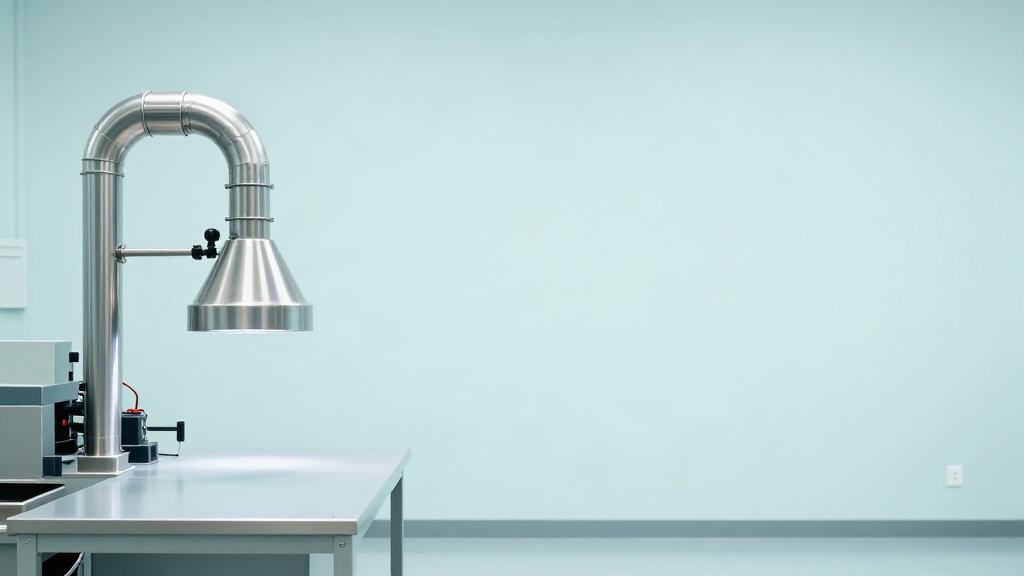
LEV captures the contaminant at the point where it is created - a fume arm over a welding bench, an extraction hood on a grinding station, ducting attached to a woodworking machine, a booth around a spray area, or a tailpipe extraction hose on a vehicle exhaust system. If your setup draws contaminant away at source through a hood, arm, duct or enclosure with a fan behind it, you almost certainly have LEV.
Which everyday processes usually trigger a testing duty
The rule of thumb is simple: if the process produces something harmful that can be breathed in, and you are extracting it, that extraction equipment is in scope. In practice, the processes that bring most businesses into a LEV testing cycle are:
- Welding, brazing and fabrication, which produce metal fume - particularly from stainless steel and galvanised work
- Woodworking, sawing, sanding and routing, which produce fine respirable dust
- Grinding, polishing, deburring and linishing, which throw off metal and abrasive dust
- Painting, spraying, coating and solvent work, which release vapour and mist
- Vehicle and industrial exhaust systems, which emit diesel fume and gases
- Any process using a substance with an occupational exposure limit, or where a Safety Data Sheet warns about inhalation
Because LEV is a control measure for substances hazardous to health, it falls squarely under the Control of Substances Hazardous to Health Regulations 2002 - COSHH. That is where the testing duty comes from.
The COSHH thorough examination and test rule in plain English
The requirement is often called a thorough examination and test, or TExT. It is a formal check of your LEV system carried out by a competent person, and it covers two things.
The thorough examination is the physical inspection: is the hood in the right place, are the ducts intact, is the fan pulling properly, are filters and seals in good condition? The test is the measurement: airflow and pressure readings taken against the system's commissioning figures, so you can see whether performance has drifted. The outcome is a report with pass or fail findings and any remedial actions recommended.
Under COSHH, LEV must be thoroughly examined and tested at least every 14 months. Certain higher-risk systems have to be checked more often. Many suppliers work on a 12-month cycle to keep it simple and leave themselves a margin.
Two points catch people out. First, the duty applies to the equipment, not to the person using it - so it does not disappear if the operator changes. Second, there is no exemption for small workshops. A one-person fabrication unit with a fume arm has the same obligation as a large factory floor.
What the testing interval depends on
Fourteen months is the legal floor, but your own interval can be shorter. Common reasons for a tighter cycle include:
- The system is used heavily - for example, multiple shifts or continuous production
- The contaminant is highly toxic, such as stainless steel fume or respirable crystalline silica
- The manufacturer's manual specifies a shorter period
- Previous tests have flagged falling performance
- Filters load up quickly in your particular process
Your tester should confirm the right interval for your system in the report, and it is worth asking them to spell it out.
Warning signs your LEV needs attention before the next test
You do not have to wait for a scheduled date if something feels wrong. Look out for:
- Visible fume or dust escaping rather than being drawn away
- Less suction than you used to have
- A grinding or rattling noise from the fan
- Damaged, dented or missing ducting and hoods
- Filters that are choked or overdue for change
- Operators complaining of smells, irritation or a taste in the air
Any of these is a reason to get the system looked at now, not on the calendar. A failed test that could have been fixed earlier is far more expensive than a repair.
What to do next if you think you need testing
If you have read this far and recognise your own workshop in it, the practical steps are straightforward. List the processes that produce dust, fume, vapour or mist. Note which of them have extraction fitted. Then find out when each system was last thoroughly examined and tested. Many owners discover there is no record at all, which usually means it is overdue.
From there, the sensible move is to get quotes for a thorough examination and test on the systems that need it, and to have a clear plan for the ones that fail. That is exactly what our quote service is for. You tell us what needs inspecting - the process, the equipment, roughly how many systems - and we identify independent LEV testing providers who can respond. You compare the options and choose who to work with. No technical exam, no obligation, and you stay in control of the decision the whole way through.
A calm summary
Rule of thumb: if you extract dust, fume, vapour or mist at source, you have LEV, and LEV needs a thorough examination and test at least every 14 months under COSHH. Small workshops are not exempt, and a clean-looking system can still fail on airflow. If you are unsure, the fastest way to find out where you stand is to ask - and if a test is due, start gathering options before the date, not after.